

Hysteroscopy: The Gold Standard for Optimising IVF Success and Investigating Failed Cycles
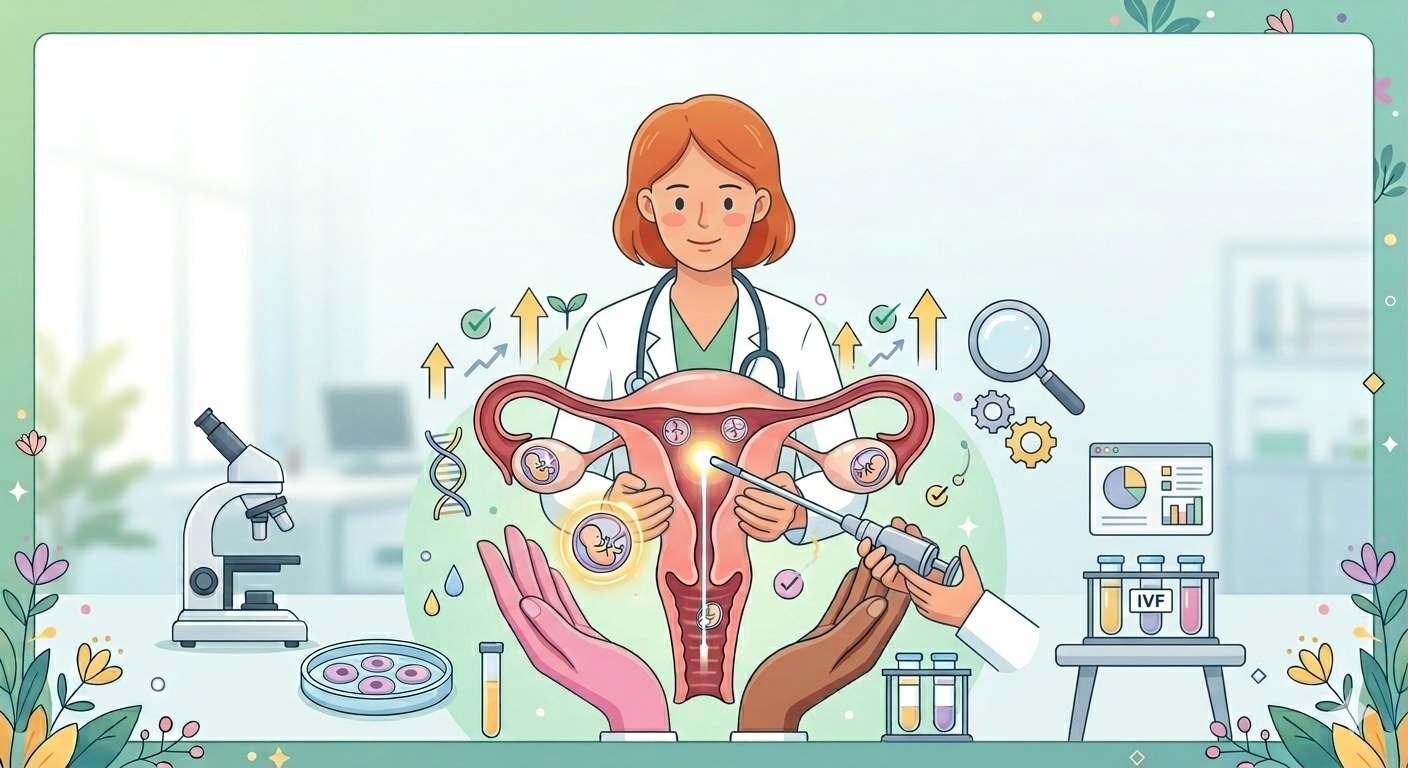
In the world of assisted reproduction, we often focus on the “seed” (the embryo). However, the “soil”—the uterine environment—is equally vital. Whether you are preparing for your first frozen embryo transfer (FET) or seeking answers after a failed cycle, a hysteroscopy is the most definitive way to ensure your womb is ready.
At Northway Clinic in London, Dr Bhushan Mokoonlall provides expert hysteroscopy services to help patients identify and treat silent barriers to pregnancy.
Small Endometrial Polyps: Do They Affect Embryo Transfer?
It is relatively common for a small endometrial polyp to be identified during a routine ultrasound or IVF “mock” cycle. These are benign overgrowths of the uterine lining and are often entirely asymptomatic.
While they aren’t dangerous, their presence can significantly influence the timing of your IVF journey. Many clinics will postpone an embryo transfer until the cavity is clear because even a tiny polyp can:
- Alter the contour of the uterine lining, making implantation difficult.
- Interfere mechanically with the embryo’s ability to attach.
- Contribute to local inflammation, creating a less hospitable environment for pregnancy.
At Northway Clinic, Dr Mokoonlall can perform a polypectomy during your hysteroscopy, ensuring your cavity is structurally perfect before you proceed with your transfer.
Identifying Hidden Adhesions and Previous Trauma
If you have previously undergone uterine procedures—such as a D&C (dilation and curettage) or surgical management of a miscarriage—you may have developed minor adhesions (scar tissue).
These adhesions are often invisible on a standard ultrasound. A hysteroscopy allows for direct visualisation, enabling the consultant to identify and treat these minor adhesions (adhesiolysis) during the same procedure, effectively “resetting” the uterine environment.
Why Choose Outpatient Hysteroscopy at Northway Clinic?
Many patients feel anxious about uterine procedures, but the modern approach at Northway Clinic is designed for comfort and convenience.
1. Comfort and Local Anaesthesia
Most procedures are performed under local anaesthesia in an outpatient setting. This means:
- Minimal Discomfort: Polypectomy and minor adhesiolysis are generally associated with very little pain.
- No General Anaesthesia: You remain awake and avoid the “grogginess” and risks associated with being put to sleep.
- Quick Recovery: Most patients return home shortly after the procedure and can resume normal activities almost immediately.
2. The Gold Standard of Care
While scans are helpful, hysteroscopy remains the gold standard for direct visualisation. It moves beyond “guessing” based on shadows on a screen, allowing Dr Bhushan Mokoonlall to see the health of the tissue in high definition.
“For patients investing significant emotional and financial resources into IVF, ensuring the uterine cavity is structurally normal is an essential step in the pathway.”
Investigating Failed IVF: Finding the “Why”
If you have experienced a failed IVF cycle or recurrent implantation failure (RIF), a hysteroscopy can provide much-needed clarity. By rule-out polyps, adhesions, or chronic inflammation (endometritis), you and your fertility team can move forward with a data-driven plan rather than relying on trial and error.
Key Benefits of Booking with Dr Bhushan Mokoonlall:
- Expert Insight: A consultant-led service with deep experience in fertility-related gynaecology.
- Immediate Management: Often, findings like polyps or adhesions can be treated during your initial diagnostic appointment.
- Patient-Centred Care: A supportive environment that prioritises your comfort and explains every step of the findings.
Take the Next Step
If you are preparing for IVF and have been told a polyp is present, or if you simply want the peace of mind that your uterine environment is optimal, a consultation is the first step.


